
Dimdima
Online Children's Magazine from India
Dimdima
Online Children's Magazine from India







Founder of antiseptic medicine
| Date of Birth-Death : 1827- 1912 |
| Country of Birth : UK |
| Major Discoveries : Antiseptics |
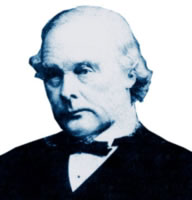
Joseph Lister decided that he wanted to be a surgeon at the young age of 16. He was a brilliant medical student. He joined as assistant to the greatest surgery teacher of that time, James Syme. Subsequently, he joined as surgeon at the Glasgow Royal Infirmary.
The conditions in the hospitals in early nineteenth century were poor. Because of the terrible pain during surgery, the surgeon had to operate as quickly as possible. The instruments were often not even washed. Nor did the surgeon take care to wash his hands. It was not known that tiny microorganisms present in these instruments, or even from the hands of the surgeon, could cause disease, especially if there was an open wound. It was no surprise, therefore that the patients going through surgery, would often suffer infections , sometimes severe enough to cause death.
It was during this time that Louis Pasteur proposed his theory that microorganisms cause disease. It came as a shock to Lister that a surgeon himself was responsible for the infections in his patients, brought on as a result of poor hygiene.
At that time, carbolic acid was being used to clean  foul smelling sewage. Lister ordered for a bottle of carbolic acid. And the next time he performed a surgery on a small boy, he washed his hands, instruments and all that came in contact with the patient with this acid. The boy survived without any sign of infection.
His technique soon revolutionized surgery as more and more patients’ lives were saved. Today the surgeon, his assistant, and the nurses all wear gowns, caps, masks and rubber gloves that have been treated with steam to kill any germs on them (This process of killing germs by some method is known as sterilization) . Even the patient is treated with antiseptic agents, so those germs from his own body do not cause infection.
EXPLORE MORE...
Get Help or Give Help.
- Do you have a Science Question?
- Post it here and get the answer.
- Some questions posted by others are not yet answered.
- View those questions and answer them.
Dimdima is the Sanskrit word for ‘drumbeat’. In olden days, victory in battle was heralded by the beat of drums or any important news to be conveyed to the people used to be accompanied with drumbeats.
Bharatiya Vidya Bhavan
K. M Munshi Marg,
Chowpatty, Mumbai - 400 007
email : editor@dimdima.com
Bharatiya Vidya Bhavan
505, Sane Guruji Marg,
Tardeo, Mumbai - 400 034
email : promo@dimdima.com
Dimdima.com, the Children's Website of Bharatiya Vidya Bhavan launched in 2000 and came out with a Printed version of Dimdima Magazine in 2004. At present the Printed Version have more than 35,000 subscribers from India and Abroad.